

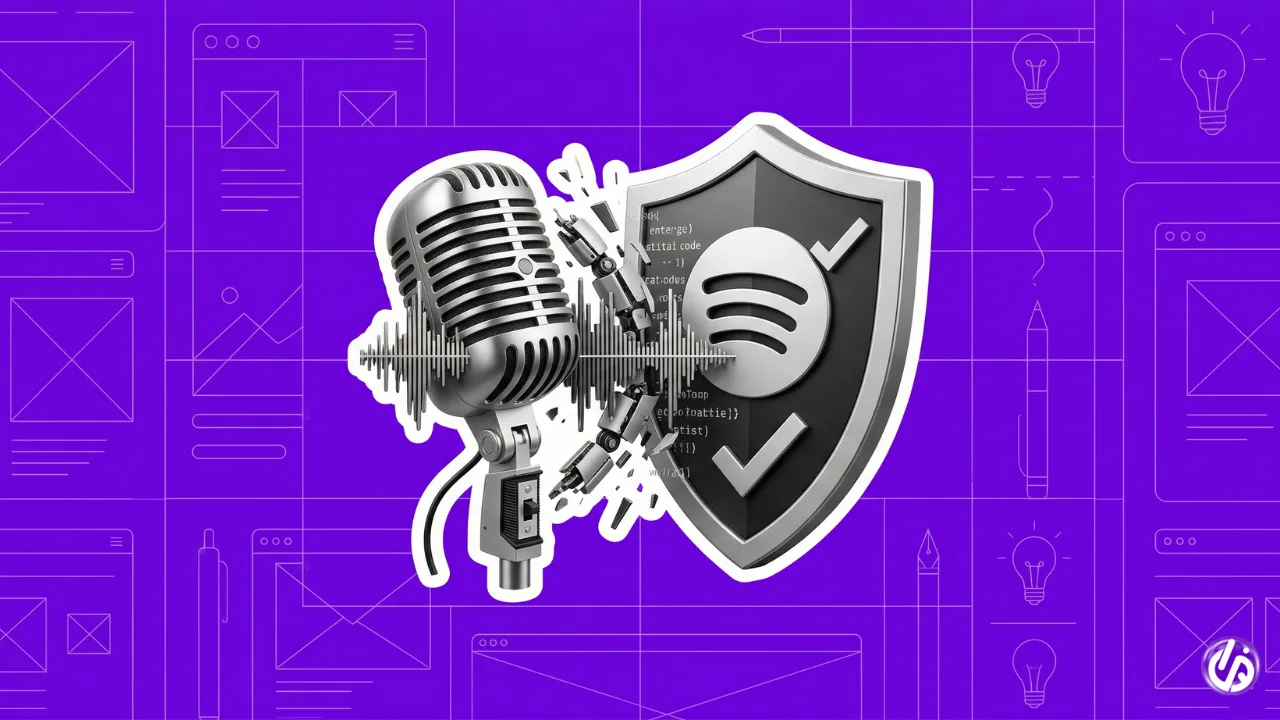
The music industry is currently navigating one of its most disruptive technological shifts since the invention of the MP3: the explosive rise of generative artificial intelligence. While AI has introduced incredible new tools for production and creativity, it has also unleashed a tidal wave of unauthorized deepfakes, voice clones, and spam tracks. Now, the world’s largest music streaming platform is taking decisive action. Spotify is officially testing a groundbreaking new tool designed specifically to stop AI songs from imitating real artists.
Dubbed “Artist Profile Protection,” this new feature, currently in its beta testing phase, represents a massive operational shift for the streaming giant. Instead of relying purely on reactive moderation and post-release takedowns, Spotify is placing the power directly into the hands of the creators. You may also like to read: 7 Things You Should Never Ask ChatGPT (And Why).
For digital rights management, artist branding, and the broader music streaming ecosystem, this is a watershed moment. As an SEO content strategist closely monitoring tech and platform algorithm shifts, it is clear that this move will redefine how content is distributed and authenticated online. Here is a deep dive into how Spotify’s new AI tool works, why the impersonation crisis reached a breaking point, and what this means for the future of the music industry.
The Rise of the AI Music Impersonation Crisis
To understand why Spotify is building this infrastructure now, we have to look at the sheer scale of the problem. Over the last two years, advancements in generative AI models have made it incredibly easy for almost anyone to produce high-fidelity audio. Tools that were once confined to cutting-edge research labs are now readily available consumer apps.
Why Fake Tracks Are Flooding Streaming Platforms
The democratization of music production is generally a positive trend, but the lack of guardrails has created a highly lucrative black market for bad actors. Scammers are utilizing sophisticated AI models to clone the voices of massive pop stars, indie darlings, and heritage acts without their consent.
These fake tracks are not just harmless internet experiments; they are calculated attempts at financial fraud. By uploading an AI-generated song that sounds exactly like Drake, The Weeknd, or Taylor Swift, scammers can generate millions of streams overnight. Because streaming platforms pay out royalties based on total listening time and stream counts, these fraudulent tracks actively siphon money away from the legitimate human artists and their record labels.
The Problem of “AI Slop”
Beyond direct voice cloning, platforms are being overwhelmed by what the industry colloquially calls “AI slop.” These are thousands of generic, artificially generated instrumental tracks uploaded by bot networks to game the algorithms. In 2025 alone, Spotify reported removing over 75 million spam tracks from its catalog. The volume is unprecedented, and the traditional methods of content moderation—relying on user reports and reactive algorithmic flags—are no longer sufficient to hold back the tide.
Introducing Spotify’s Artist Profile Protection
In response to the growing outrage from musicians, record labels, and fans, Spotify has rolled out the beta version of its “Artist Profile Protection” tool. This feature fundamentally changes the upload pipeline for music distribution.
How the New Approval Tool Works
Historically, streaming platforms have operated on an “open door” policy. A musician simply uploads their track via a third-party distributor (like DistroKid or TuneCore), and within a few days, the song automatically appears on their Spotify page. This frictionless system was great for indie artists but left a glaring vulnerability: anyone could upload a song and attach it to another artist’s profile.
The Artist Profile Protection tool turns the artist into a gatekeeper. When an artist opts into the beta program, any new track submitted to Spotify under their name triggers an immediate notification in their “Spotify for Artists” dashboard.
The artist can then listen to the track, review the metadata, and make a binary choice:
-
Approve: The track is verified as legitimate, goes live on the platform, and counts toward the artist’s official statistics, monthly listener count, and algorithmic recommendations (like Release Radar).
-
Decline: The track is rejected, blocked from appearing on the artist’s profile, and sent back to the distributor for review.
Shifting from Reactive to Proactive Control
This is the most critical aspect of the new Spotify AI tool. Previously, artists were forced to play a frustrating game of digital whack-a-mole. A fake AI song would appear on their profile, fans would listen to it (often assuming it was a leaked track or a surprise drop), and the artist’s management team would have to file a copyright takedown request. This process could take days, during which the scammer was generating revenue and the artist’s brand was being diluted.
By implementing an approval buffer, Spotify is transitioning from reactive policing to proactive prevention. The fake tracks are neutralized before a single fan can press play.
The Impact on Independent and Major Artists
While megastars certainly suffer from AI cloning, the Artist Profile Protection tool is arguably even more vital for independent and mid-tier artists who lack massive legal teams to constantly monitor their catalogs.
Stopping Misattribution and Metadata Errors
Interestingly, this tool solves a problem that predates the current AI boom: metadata misattribution. Because there are millions of artists globally, many share the same or similar names. It is incredibly common for an independent artist to wake up and find a completely different genre of music uploaded to their profile due to a routing error by a distributor.
More maliciously, bad actors have exploited this loophole by intentionally uploading cheap, AI-generated beats to the profiles of established indie acts—such as King Gizzard & The Lizard Wizard or Father John Misty—hoping to catch a few thousand streams from confused fans before the track gets pulled. The new approval workflow stops this “domain squatting” dead in its tracks.
The Fight Against AI Voice Clones and Deepfakes
For major labels, the stakes are aggressively high. Sony Music Entertainment recently made headlines by formally requesting the removal of more than 135,000 tracks across various platforms that it claimed were unauthorized AI impersonations of its roster.
Spotify’s new tool acts as a much-needed firewall. Even if an AI generator manages to perfectly replicate an artist’s vocal timbre and cadence, the track cannot successfully hijack the artist’s official Spotify presence without explicit, manual approval from the artist’s verified account.
Challenges and the Future of AI Music Moderation
While the introduction of the Artist Profile Protection tool is being widely celebrated by the music community, implementing an approval layer into a massive, global distribution network does present distinct challenges.
Will the New Tool Slow Down Music Releases?
The primary concern regarding this new system is friction. The music industry moves incredibly fast, and independent artists rely on speed and seamless distribution to capitalize on viral trends. By requiring manual approval, Spotify is inherently adding a speed bump to the release process.
If an artist forgets to check their dashboard, or if a management team misses an email notification, a legitimate, highly anticipated single could be delayed from hitting the platform on release day. To mitigate this, Spotify is reportedly developing “trusted distributor” codes, allowing artists to pre-approve content coming from specific, verified partners automatically. However, for artists who manage their own catalogs, this feature will require active, ongoing digital housekeeping.
Industry-Wide Transparency and AI Disclosures
The Artist Profile Protection tool is just one piece of a much larger puzzle. Spotify has explicitly stated that it is not against artificial intelligence in music. Many artists legitimately use AI tools for mixing, mastering, or even generating experimental background samples. The goal is not to ban the technology, but to ban the deception.
To that end, Spotify is working alongside industry groups to implement the DDEX standard—a universal metadata framework that will eventually display AI disclosures directly in the song credits. Soon, listeners will be able to tap on a track and see exactly if and how AI was utilized in the production process. This nuanced approach separates the legitimate, creative use of next-generation software from the malicious, unauthorized cloning of human talent.
Conclusion
The introduction of the Artist Profile Protection tool marks a defining chapter in the ongoing battle for digital authenticity. As AI models become increasingly sophisticated and indistinguishable from human performance, platforms can no longer afford to be passive hosts. They must actively protect the identities and livelihoods of the creators that drive their business.
By allowing artists to proactively review and block unauthorized releases, Spotify is setting a new industry standard for creator safety. It effectively short-circuits the financial incentives for AI scammers, ensuring that royalties flow to authentic human artists rather than bot farms churning out synthetic slop.
While the system may introduce a slight learning curve and require more active catalog management from musicians, the trade-off is undeniable. In the age of generative AI, control over one’s digital likeness is paramount. Spotify’s new tool proves that the music industry is finally fighting back against deepfakes, ensuring that the future of streaming remains firmly in the hands of the artists themselves.
Never miss an update! Turn on our post notification and follow us @SparktopusBlog on all social media to stay updated!