

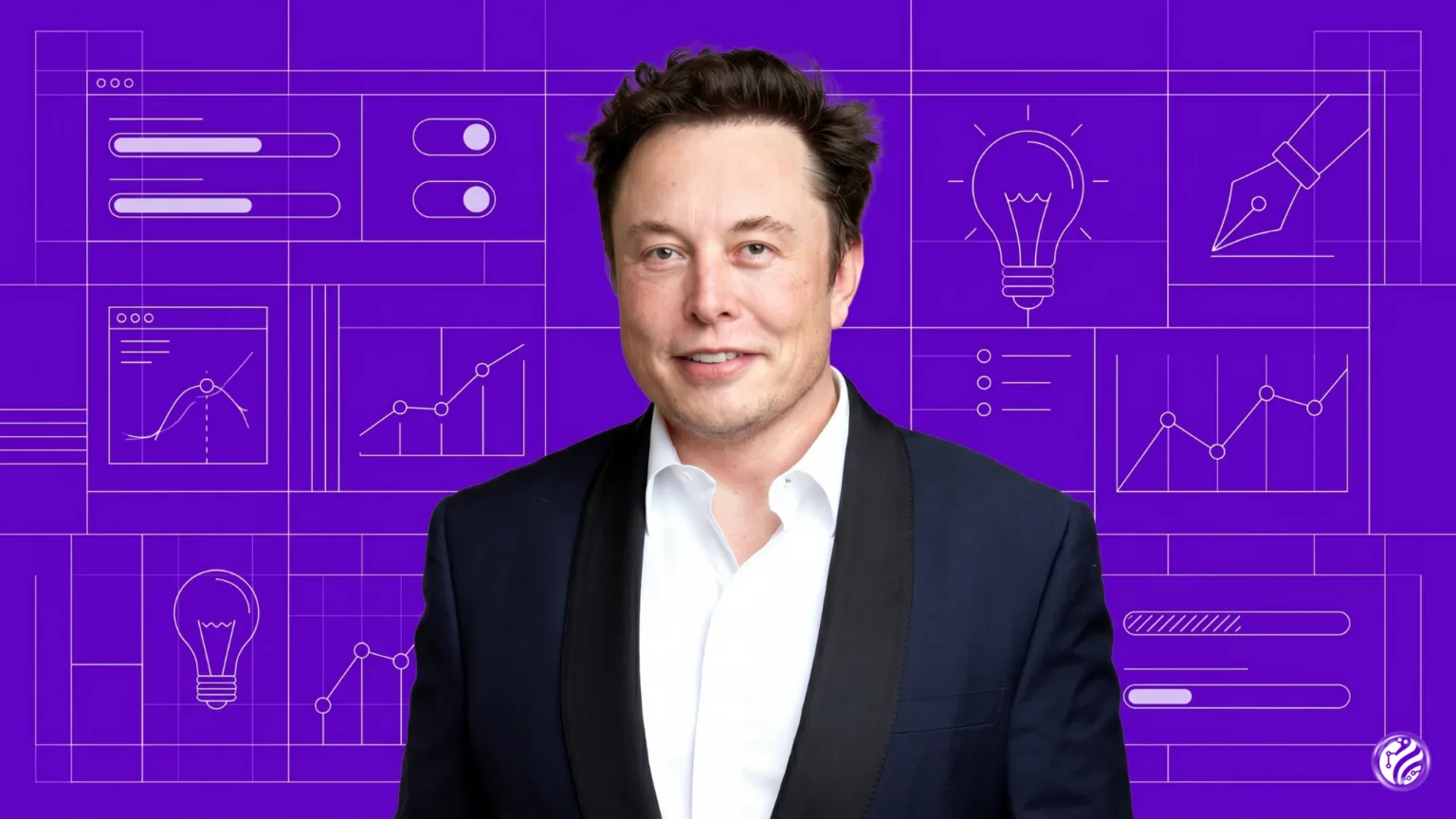
Few entrepreneurs have reshaped multiple industries at once. Elon Musk is one of them. His journey is not just about wealth or fame. It is about calculated risk, long-term vision, and an unusual tolerance for failure.
For entrepreneurs and business owners, his story is not something to admire blindly. It is something to study, dissect, and apply where it makes strategic sense.
Early Life and Foundations of an Unconventional Thinker
Elon Musk was born in Pretoria, South Africa, in 1971. From an early age, he showed a deep interest in technology and problem-solving. By 12, he had already created and sold a basic video game.
This matters because it reveals a pattern. Musk did not stumble into entrepreneurship. He built technical leverage early. Many founders skip this phase and jump straight into business without developing a core skill. That is a mistake.
He later moved to North America, attending the University of Pennsylvania, where he studied physics and economics. That dual focus shaped how he approaches business today. He combines scientific thinking with financial strategy.
The First Break: Zip2 and PayPal
Musk’s first major venture was Zip2, a company that provided online business directories for newspapers. It was eventually sold for nearly $300 million.
He did not stop there. He co-founded PayPal, which transformed how money moves online. PayPal was later acquired by eBay for $1.5 billion.
Here is the key insight. Musk did not chase random ideas. He focused on infrastructure-level opportunities. Payments and information distribution are foundational systems. That is where real leverage exists.
Most entrepreneurs aim too small. They build tools instead of systems.
Tesla: Reinventing an Industry That Resisted Change
When Musk joined Tesla, Inc., the automotive industry was stagnant in innovation. Electric cars existed, but they were not scalable or desirable.
Tesla changed that by focusing on three things:
- Product excellence
- Brand positioning
- Long-term infrastructure
Instead of building cheap electric cars, Tesla started with high-end vehicles. This created demand and funded future development. It was a counterintuitive strategy that worked.
For business owners, the lesson is simple. Do not always compete on price. Compete on value and perception first. Then scale down.
Tesla also invested heavily in charging infrastructure. That is strategic thinking. They did not just sell cars. They built the ecosystem needed to sustain them.
SpaceX: Turning Science Fiction Into Business Reality
Musk founded SpaceX with a clear goal: reduce space transportation costs and enable human life on other planets.
At the time, this sounded unrealistic. Even today, many consider it extreme.
But SpaceX succeeded by focusing on cost reduction through reusability. Traditional rockets were single-use. SpaceX made them reusable, drastically lowering costs.
This is where most founders fail to think deeply. They optimize the surface level instead of questioning the entire system.
Ask yourself:
Are you improving a broken model, or are you rebuilding it from scratch?
Other Ventures: Expanding Influence Across Industries
Musk did not stop with Tesla and SpaceX. His portfolio includes:
- Neuralink, working on brain-computer interfaces
- The Boring Company, focused on solving traffic congestion
- X (formerly Twitter), acquired to reshape digital communication
Each company targets a large, unsolved problem. That is a pattern worth noting.
He does not build for trends. He builds for inevitabilities.
Elon Musk’s Business Strategy: What Actually Works
There is a lot of noise around Musk. Strip that away, and a few clear strategies emerge.
1. First Principles Thinking
Musk breaks problems down to their fundamental truths. Instead of copying competitors, he asks what is actually possible.
This approach is powerful but difficult. It requires deep understanding, not surface-level knowledge.
Most entrepreneurs rely on analogies. Musk relies on physics.
2. Vertical Integration
Tesla and SpaceX control large parts of their supply chains. This reduces dependency and increases control.
The downside is complexity and capital requirements. This is not a strategy for beginners.
If your business is small, focus on control where it matters most. Do not try to own everything too early.
3. Aggressive Risk Tolerance
Musk has repeatedly invested his own capital into his companies during crises.
This is not reckless. It is calculated risk based on conviction.
But here is the reality. Most people cannot afford to take that level of risk. Blindly copying this behavior will destroy your business.
Understand your limits before adopting this mindset.
4. Long-Term Vision Over Short-Term Gains
SpaceX and Tesla were not profitable for years. Most investors would have walked away.
Musk stayed focused on long-term outcomes.
This is where many entrepreneurs fail. They chase quick wins instead of building durable systems.
Leadership Style: Effective but Controversial
Musk is known for being demanding. Extremely demanding.
He expects high performance and rapid execution. This creates results but also burnout.
From a business perspective, this raises an important question. Can you scale intensity without breaking your team?
For most founders, the answer is no.
You need systems, not just pressure. Otherwise, your business becomes dependent on constant urgency, which is not sustainable.
Failures and Setbacks: The Part Most People Ignore
Musk’s story is often presented as a straight line of success. That is inaccurate.
He faced:
- Near bankruptcy during Tesla’s early years
- Multiple failed rocket launches at SpaceX
- Public criticism and market volatility
The difference is not that he avoided failure. It is that he absorbed it and adjusted quickly.
Entrepreneurs romanticize failure. That is dangerous.
Failure is only useful if it leads to better decisions. Otherwise, it is just loss.
Net Worth and Influence
Musk is consistently ranked among the richest individuals in the world. His net worth fluctuates due to stock valuations, particularly with Tesla.
But focusing on net worth misses the point.
Wealth is a byproduct of building high-impact systems. If your only goal is money, you will likely miss the bigger opportunities.
What Entrepreneurs Should Actually Learn From Elon Musk
Let’s cut through the hype.
Not everything Musk does is replicable. In fact, most of it is not.
Here is what is worth applying:
Think Bigger, But Validate Reality
Ambition without execution is useless. Musk combines both.
Do not shrink your vision. But stress-test it aggressively.
Build Systems, Not Just Products
PayPal was not just an app. Tesla is not just a car company.
They are systems that solve broader problems.
If your business depends on a single product, it is fragile.
Leverage Technical Understanding
You do not need to be an engineer. But you need to understand how your product works at a deeper level.
Outsourcing everything creates dependency. That limits growth.
Stay Focused on Long-Term Value
Short-term wins are tempting. But they rarely build lasting businesses.
Think in years, not weeks.
Final Perspective: Genius or Strategy?
There is a tendency to label Elon Musk as a genius and move on.
That is lazy thinking.
His success is not random. It is a combination of:
- Deep technical understanding
- Strategic positioning
- High risk tolerance
- Relentless execution
You may not replicate his scale. But you can adopt elements of his approach.
The real question is this:
Are you building something that matters long-term, or are you just staying busy?
Because that difference determines everything.