
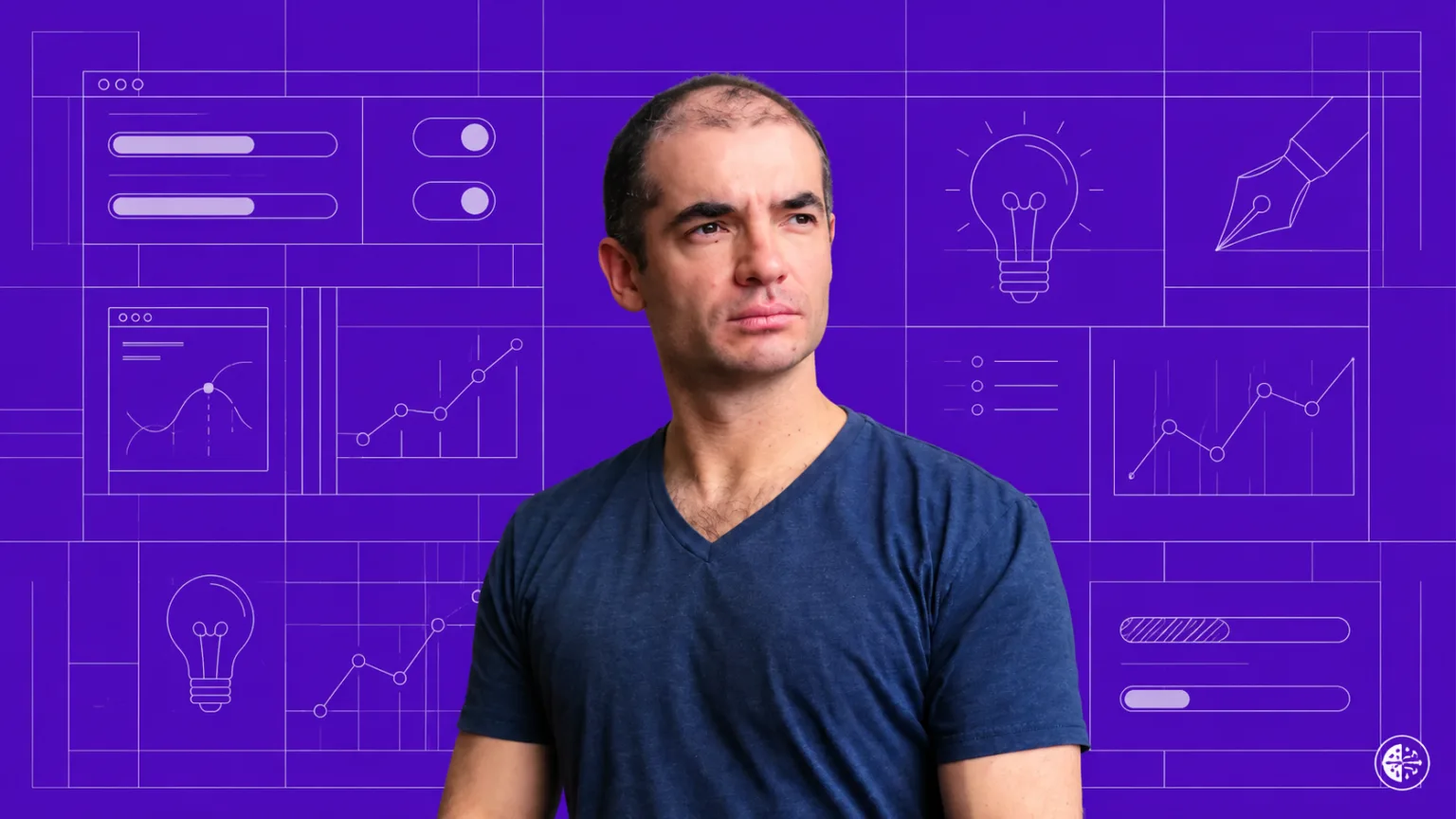
Few researchers have shaped modern artificial intelligence as profoundly as Ilya Sutskever.
While many AI executives became publicly recognized through products and media appearances, Sutskever earned respect primarily through groundbreaking research. His work in deep learning helped lay the foundation for the AI systems now transforming industries worldwide.
As a co-founder and former chief scientist of OpenAI, Sutskever played a central role in the rise of generative AI and large language models.
His influence extends far beyond one company.
He is widely regarded as one of the most important technical minds in modern AI history.
Early Life and Education
Ilya Sutskever was born in 1985 in what is now Russia before later moving to Israel and eventually Canada.
From an early stage, he developed a strong interest in mathematics, computing, and machine learning.
He later studied at the University of Toronto, where he worked under legendary AI researcher Geoffrey Hinton.
This environment would become one of the most influential centers in the history of deep learning research.
At the time, neural networks were still viewed skeptically by many parts of the computer science community. However, researchers like Hinton and Sutskever continued advancing the field despite limited mainstream acceptance.
That persistence would eventually reshape the entire technology industry.
Contributions to Deep Learning
Sutskever became widely recognized for his contributions to deep learning, a branch of machine learning focused on neural networks capable of learning from massive amounts of data.
One of the major breakthroughs associated with his work was the success of deep neural networks in image recognition tasks.
These breakthroughs demonstrated that sufficiently large neural networks trained on powerful hardware and large datasets could outperform previous AI approaches dramatically.
This moment changed the trajectory of artificial intelligence research.
Deep learning quickly became the dominant paradigm across fields including:
- Computer vision
- Natural language processing
- Speech recognition
- Recommendation systems
- Generative AI
Sutskever’s research helped establish the technical foundations that modern AI companies still build upon today.
Work at Google Brain
Before co-founding OpenAI, Sutskever worked at Google as part of the Google Brain project.
Google Brain became one of the most important AI research divisions in the world, helping accelerate breakthroughs in machine learning and large-scale neural networks.
During this period, Sutskever worked on advanced sequence models and neural network architectures that later influenced modern large language models.
His research contributed to the rapid advancement of AI capabilities across multiple domains.
By this stage, he had already become one of the most respected technical researchers in the AI community.
Founding OpenAI
In 2015, Sutskever co-founded OpenAI alongside figures including:
The organization launched with a mission centered on ensuring artificial general intelligence benefits humanity.
Sutskever became OpenAI’s chief scientist and played a major role in guiding the company’s research direction.
His expertise was especially important during the development of increasingly advanced language models.
Under OpenAI, research accelerated rapidly, eventually leading to the GPT series and the rise of generative AI.
Role in GPT and ChatGPT
Sutskever played a key role in the development of GPT models, which transformed natural language processing and conversational AI.
These models demonstrated unprecedented abilities in:
- Writing
- Reasoning
- Summarization
- Coding
- Language understanding
The release of ChatGPT introduced these capabilities to mainstream users worldwide.
This moment became one of the most important turning points in technology history.
AI shifted from a specialized research area into a mainstream productivity platform used by businesses, students, developers, creators, and enterprises globally.
Sutskever’s research contributions were central to that transformation.
AI Safety and Alignment
Beyond technical innovation, Sutskever became increasingly focused on AI safety and alignment.
As models grew more powerful, concerns emerged around:
- Misuse
- Reliability
- Control
- Long-term societal impact
- Artificial general intelligence
Sutskever repeatedly emphasized the importance of building AI responsibly as capabilities scale further.
This perspective influenced major discussions within OpenAI and the broader AI industry.
His focus reflected a growing realization among top researchers that advanced AI systems could have civilization-level implications.
OpenAI Leadership Tensions
Sutskever also became widely discussed during leadership tensions inside OpenAI.
A major controversy emerged when CEO Sam Altman was temporarily removed from the company before later returning.
Sutskever was reportedly involved in the board decisions surrounding the event, which generated intense public attention across the tech industry.
The situation highlighted growing tensions between:
- Rapid commercialization
- AI safety priorities
- Governance structures
- Long-term strategic direction
It also revealed how influential Sutskever had become within OpenAI’s leadership and research culture.
Legacy in Artificial Intelligence
Ilya Sutskever’s impact on artificial intelligence is difficult to overstate.
His work helped drive the transition from traditional machine learning systems to modern deep learning architectures that power today’s AI revolution.
The technologies influenced by his research now shape:
- Search engines
- Recommendation algorithms
- AI assistants
- Autonomous systems
- Enterprise software
- Content generation tools
Many of the most important AI breakthroughs of the modern era can be traced back to research environments and ideas Sutskever helped build.
The Bigger Picture
Ilya Sutskever represents a rare combination of scientific depth and industry influence.
Unlike many public technology figures focused on branding and media visibility, his reputation was built primarily through technical achievement and long-term research contributions.
As artificial intelligence continues reshaping the global economy, his work remains deeply embedded in the systems driving that transformation.
His story is ultimately tied to one of the defining technological questions of this century:
How humanity develops intelligence beyond traditional software while maintaining control, safety, and alignment.